bannerCultural 03

Monitor Program

Pechanga's Monitor Program helps us preserve and protect our cultural resources throughout our aboriginal territory. Pechanga Cultural Resources has supported this strong initiative for several years in order to fulfill this responsibility — to our land and to our children.

Our site-monitors supervise the land guided by traditional environmental knowledge, spiritual beliefs, and the ethical principles and practices of our People, in addition to using the best practices of non-native site monitors to full benefit. The goal is to sustain our environment, our traditional knowledge and to protect against developmental destruction.

Working Together as a Community

Our monitors participate in the California Environmental Quality Act (CEQA) for site assessment — this environmental review process includes all of the lead agencies from the county. Monitors work with more than five cities in one county advising new developments: the City of Temecula, Lake Elsinore, the City of Riverside, Hemet, and Escondido. They work with developers to protect and provide insight to various sites: pictographs, mortars, sacred/ religious, villages, pre-historic, and 200-10,000 years old. Their in-depth historical and traditional knowledge of our original aboriginal lands brings valuable practice to these efforts that would otherwise be unavailable.

Understanding the Land as It was

Many decisions in renewable resource management and environmental impact assessment depend on understanding the land as it was. The Pechanga ancestral lands, the territory of concern, is immense: several hundred square miles that run north to Riverside and Corona, east to Hemet, south to Escondido, and west to the coast from Agua Hedionda lagoon in the south to San Mateo Creek in the north. Monitoring this land for impact and change is a significant, almost daunting feat. Our monitors are currently overseeing more than 400 sites in only half of the land. When we can't stop all inappropriate development, we monitor — and when we are unable to preserve an entire area we monitor grading/ ground disturbing activities — we go out and watch the cutting of the ground on all native soil. Our specific knowledge allows us to appropriately identify and preserve important artifacts while we work side-by-side and increase the knowledge of nonnative archeological monitors too.

A Program of Highest Standard

Pechanga's monitoring efforts include collaboration with academia, professionals and within our tribal nation. The result of our collaborations is a Monitoring Program that is a model nationwide. Pechanga has one of the largest tribal preservation effort in the nation. Our monitors have fused their goals with local environmental and development programs and scientific expertise of professional anthropologists and archaeologists, within a student-centered educational program. The outcome is a truly tribally focused, academically validated site monitor certification program that not only meets high professional standards, but serves as the platinum standard for the region, state, and nation.
bannerCultural 03

Minerals

Mineral Resources

Mineral resources played an important role in the day-to-day lifestyle of the ‘atáaxum. The uses of minerals are diverse: most are raw materials for tool production, but others are used for adornment or added to foods to preserve them or improve their nutritional value.

  • Obsidian
  • Limestone
  • Steatite
  • Chert
  • Chalcedony
  • Clay
  • Iron/Hematite
  • Red ochre
  • Basalt
  • Vesicular basalt
  • Granite
  • Slate
  • Micaceous schist
  • Tourmaline
  • Quartz
  • Quartzite
  • Serpentine
  • Mica
  • Travertine
  • Salt
  • Pumice
  • Jasper

Salt

One of the most important minerals was salt. The ‘atáaxum processed ocean salt and traded this product throughout Southern California. Salt was especially important in the hotter regions of the desert. Salt gathering is still practiced today.

Stone

Stone tool manufacture is one of the most common uses of minerals. We have been making knives, arrowheads, spear points, axes, abraders, scrapers, drill points, and ceremonial wands from stone for thousands of years. Milling stones, such as manos, pestles, metates, grinding slicks and bedrock mortars are common components of the many village sites located throughout ‘atáaxum territory.

Other uses of stone include arrow straighteners, cooking stones, heating stones, weights, bowls, polishing stones, and pipes. Besides utilitarian uses, many minerals were used for carvings, pendants, medicine stones and adornment, and this practice continues today.

Flint knapping

Flint knapping is the process of removing selected areas of a stone to produce sharp-edged tools. The Pechanga Youth learn to flint knap during community programs held on the Pechanga Reservation.

Locating resources

One of the most important aspects of mineral utilization is where to find these resources. Some resources are readily obtained locally while others are traded over hundreds of miles. The closest known obsidian source to ‘atáaxum territory is Obsidian Butte, which is located along the eastern shore of Salton Sea in Imperial County. This material is of poor quality when compared to materials from Coso Hot Springs, Queen Mountain, and Glass Mountain. Recent studies indicate that some obsidian found in the Temecula Valley came from as far away as Mexico.


bannerCultural 03

Language Revitalization

Luiseno300x160Every Pechanga tribal member shares a vision for the survival of our cultural spirit and the values and traditions through which it survives. Through our language we experience, teach, and live our way.
Connecting Us to Our Story

The revitalization of the Pechanga language (cham'teela), Luiseño, is part of a larger movement to retain our cultural strengths in the face historical struggles and modern technology. Our language contains our worldview and soul of our people. Complexity of cultural practice, tribal and familial relations, unique and intangible human resources and expressions are all reflected within.

The erosion of our language signals the erosion of accumulated knowledge of culture, spiritual practice, medicinal knowledge, custom, and history. Policy, and public and private schools have, at times knowingly, at times unwittingly, stripped language from our children— and thus their sense of balanced self-awareness. The revitalization of our language brings traditional balance to our continuing educational work and reestablishes critical elements to our culture.

Finding Our Voice Again

Culturally significant, academically sound, and socially appropriate education for Native American children is possible. With guidance and support from elders, and the helping hand of dedicated teams and technology, the Pechanga Tribe is teaching our children our language, songs, stories and traditions.


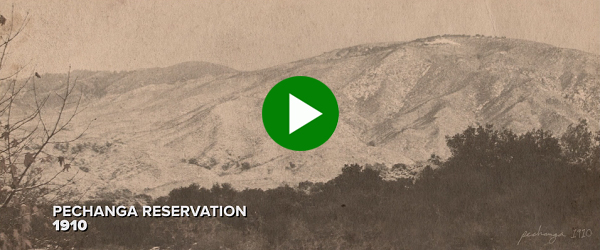
Pechanga Documentary video

Documentary1

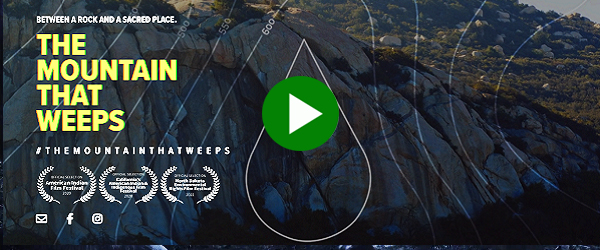
Pu’éska Documentary video

Watch The Mountain That Weeps